
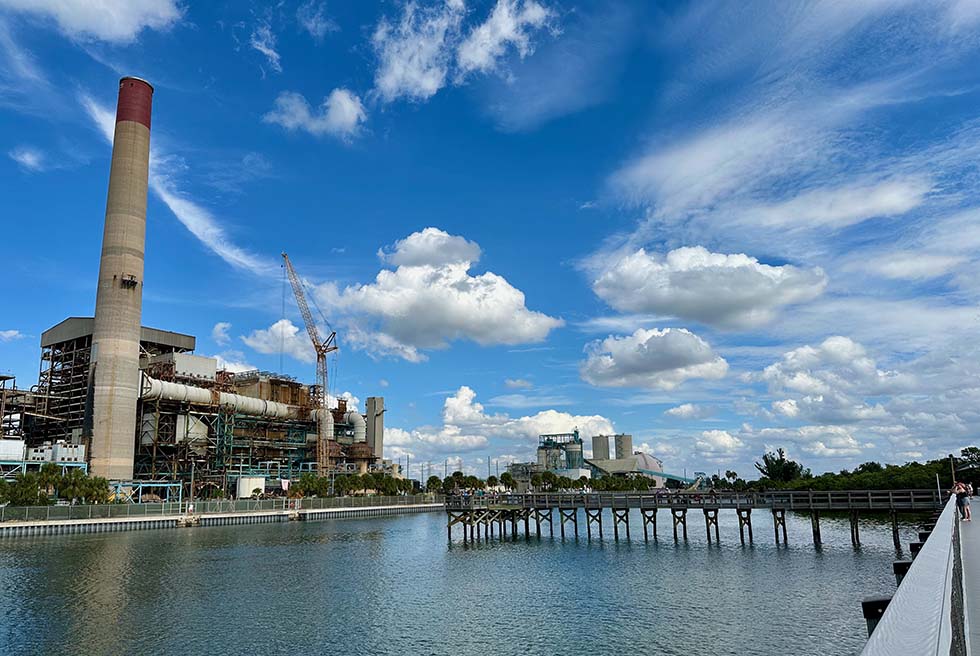
Much as Tampa’s beloved snowbirds drive south for the winter, manatees also seek out a more temperate habitat as temperatures drop. The mammals are attracted to warm water, and where better to go than TECO’s Big Bend Power Station in Apollo Beach?
According to TECO’s website, the power station takes water from Tampa Bay for cooling purposes, then releases clean, warm water back into the bay. The manatees are drawn to the warmer water, and in colder weather, they enjoy relaxing in the discharge canal, which is a federally designated manatee sanctuary.
The electric company built a Manatee Viewing Center to allow visitors an up-close look at these gentle giants. The center is open from November 1 through April 15 from 10 a.m. to 5 p.m. I hadn’t been to the center since I was pregnant with my now 19-year-old son, and I decided I was well past due for another visit.
The drive to Apollo Beach took approximately 45 minutes. Parking at the center is free, and I easily found a spot in the main lot; they also have an overflow lot for busier days. Admission is also free, so I headed toward the center’s entrance past a small children’s play area where a Kona Ice truck was parked.
A boardwalk led to the primary outdoor observation platforms. Approximately a dozen other visitors were also looking for manatees, and I immediately saw the back of a manatee floating comfortably offshore.
I remembered seeing many more manatees during my previous visit, but the weather was still quite warm on the day I visited. The website notes that visitors are likely to encounter greater numbers of the large animals when the water temperature drops below 68 degrees.
I hung out on the boardwalk for a while and spotted a mother and her baby in the shallow water. I tried to take some photos, but the manatees were elusive and stayed underwater the majority of the time. There were signs with pictures posted to help visitors identify the other wildlife they could encounter in the viewing area, including various types of birds and fish.
After seeing a total of about four manatees, I opted to move on to the other parts of the center. The Southshore Café was open and serving snacks and drinks, and I spied a butterfly garden as well. I stopped into the Environmental Education Building, which was filled with models of manatees and activities, most of which were geared toward children.
A large portion of the relatively small center was dedicated to the hazards that manatees face in Tampa Bay, including boat strikes, cold stress and entanglement. There were exhibits highlighting the different types of manatees and their habitats and what to do if you find an injured manatee.
There was a sign explaining that the viewing center is just one part of the Florida Conservation & Technology Center. A Clean Energy Center; Sea Turtle Rehabilitation Center; Marine Fisheries Enhancement Center; Suncoast Youth Conservation Center; and the Hiking and Wildlife Observation Tower were among the other destinations.
I left the center and followed the signs toward the 900-foot Tidal Walkway – a long boardwalk that leads visitors through a tree-covered area in the direction of open water. There were viewing platforms in two different directions, and I headed toward the less crowded one. I saw two more manatees and followed them along the walkway in another futile attempt to get a clear photo.
When I went to the walkway’s second platform, visitors were talking about having seen a shark in the water. I didn’t see any sharks, but the posted signs showed that black-tipped sharks could be spotted.
After returning to the center, I visited the butterfly garden. Past the garden, there were rows of picnic tables, which I’m guessing were intended for younger guests on field trips. There was also a sandbox, a chalkboard and a hurricane simulator near the tables. Visitors could pay to make their own manatee or shark using mold-a-rama machines.
I wandered around looking for the cownose rays touch tank, and a staff member informed me it had been damaged by last year’s hurricanes and is being repaired. H said he hoped it would be open within a month.
All in all, I spent about an hour and fifteen minutes at the viewing center. It was a beautiful day with temperatures in the mid 80s, which I’m certain contributed to the scarcity of the manatees. I was a little disappointed by how few I actually spotted. When I spoke to my adult daughter about the experience later in the day, she pointed out that their relative rarity is part of their intrigue. I think that she’s right, and highly recommend a visit during colder weather.
KNOW BEFORE YOU GO:
- The center is closed on Thanksgiving, Christmas Day and Easter. Pets are not allowed. For more information, visit com/company/mvc.
- There’s a coastal habitat trail connected to the Manatee Viewing Center.
- If you’re interested in becoming a volunteer docent, visit the “Contact Us” page on TECO’s website and select “Manatee Viewing Center” from the pull-down menu.